
Self-Compassion Quiz Results:
You’re a purple belt in self-compassion.
Your self-compassion skills are becoming more ingrained. You are better at balancing self-critique with self-support, recognizing when to push yourself and when to pull back. This balance is crucial in both jiu jitsu and personal growth. You're able to face tough days on the mats with a positive mindset, knowing that each challenge is a chance to learn.
Continue to cultivate this awareness. Reflect on how you handle disappointments and setbacks, both in training and in competitions. Are you maintaining a compassionate approach towards yourself? Strengthening this balance will help you handle the emotional and physical demands of jiu jitsu, making you a more resilient and reflective athlete.
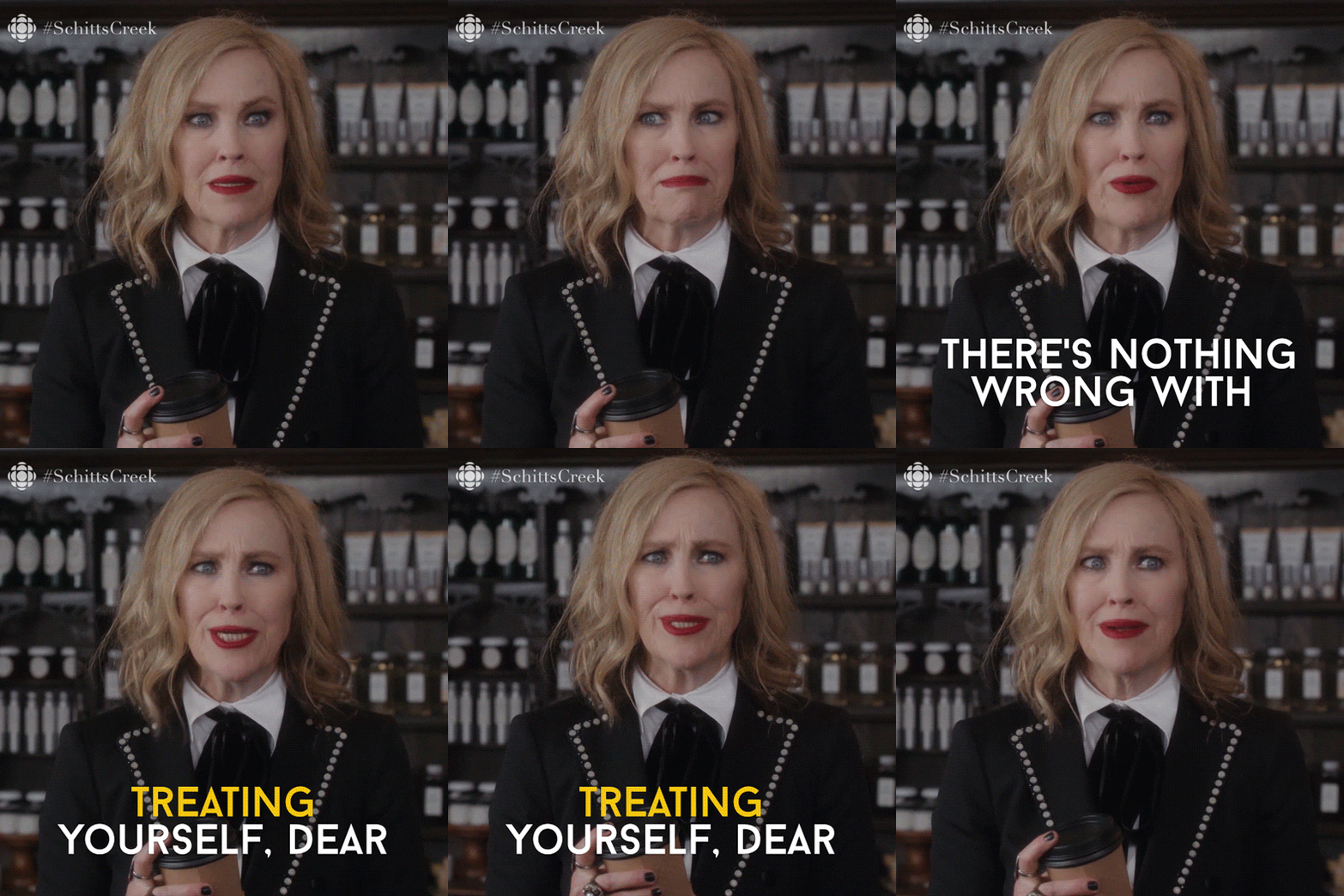
What is self-compassion anyway?
Dr. Kristen Neff is the foremost researcher on self-compassion. Her work spans decades and has been applied to an array of different populations: healthcare workers, athletes, parents, educators, veterans, business professionals, students, and adolescents.
Self-compassion in jiu jitsu is about treating yourself with kindness and understanding, much like you would support a teammate. It involves recognizing that setbacks and tough training sessions are common experiences, not personal failings. Adopting this mindset allows you to view challenges as opportunities to learn and grow, rather than reasons for harsh self-criticism.
The benefits of self-compassion are significant. Those who maintain this kind attitude towards themselves tend to stay more motivated and resilient, which is crucial in a sport that demands constant learning and adaptation. They’re better equipped to handle the inevitable ups and downs of training and competitions, allowing themselves to see their situation from another perspective.
Creating a self-compassionate environment within a gym also promotes a healthier, more supportive training culture. It fosters a space where all members feel safe to push their limits and make mistakes, knowing that these are part of their growth rather than points of judgment. This not only helps individuals in their personal development but also strengthens team cohesion, enhancing the overall dynamics and success of the gym.
The three components of self-compassion are mindfulness, self-kindness, & common humanity. See more below:
-
Mindfulness is about maintaining a moment-by-moment awareness of your thoughts, feelings, bodily sensations. It’s becoming a witness to your thoughts rather than following what-if spirals or distracting commentary. It involves paying close attention to your technique during drills, being fully present during sparring, and not letting distractions pull your focus away from the task at hand.
Practicing mindfulness helps you manage stress and anxiety, particularly in high-pressure situations like competitions, by keeping you engaged in the present rather than worrying about potential outcomes. This can lead to improved performance, as you're better able to react to your opponent's actions and execute your game plan effectively.
-
Self-kindness means actively supporting yourself throughout your training journey, much like a coach or a trusted teammate might do. It’s about encouraging yourself when learning new techniques or recovering from a tough loss in competition. This involves acknowledging that sometimes you’re the hammer and sometimes you’r the nail. Mistakes are vital learning opportunities, not failings.
It's crucial to celebrate your victories, no matter how small—like mastering a guard pass or simply committing to your training schedule consistently. This kind of positive self-talk boosts your confidence and resilience, enabling you to push through tough phases without unnecessary self-criticism.
-
Recognizing common humanity involves understanding that everyone on the mats share similar experiences—nerves before a match, frustration during a plateau, or euphoria after a win. Embracing this concept helps you realize that your feelings and struggles are not unique but part of the universal experience of being a jiu jitsu athlete and a human.
This awareness can lessen feelings of isolation and build empathy among teammates, as everyone recognizes they’re part of a wider community facing similar challenges. It promotes a more inclusive and supportive gym culture where members feel connected and are more likely to help each other succeed.
Wanna learn more? Here are some resources:
Dr. Kristen Neff’s website - https://self-compassion.org/
Dr. Neff’s book Self-Compassion: The Proven Power of Being Kind to Yourself - Amazon link
Using Self-Compassion to Manage Difficult Sport Experiences - Frontiers for Young Minds
Work with me to improve your mental toughness via self-compassion.
Book a FREE call.
Let’s talk about self-compassion. I offer hourly 1-on-1 sessions to cater to your individual performance needs. Feel free to book a chemistry call to get to know one another and see if we would be a good fit.